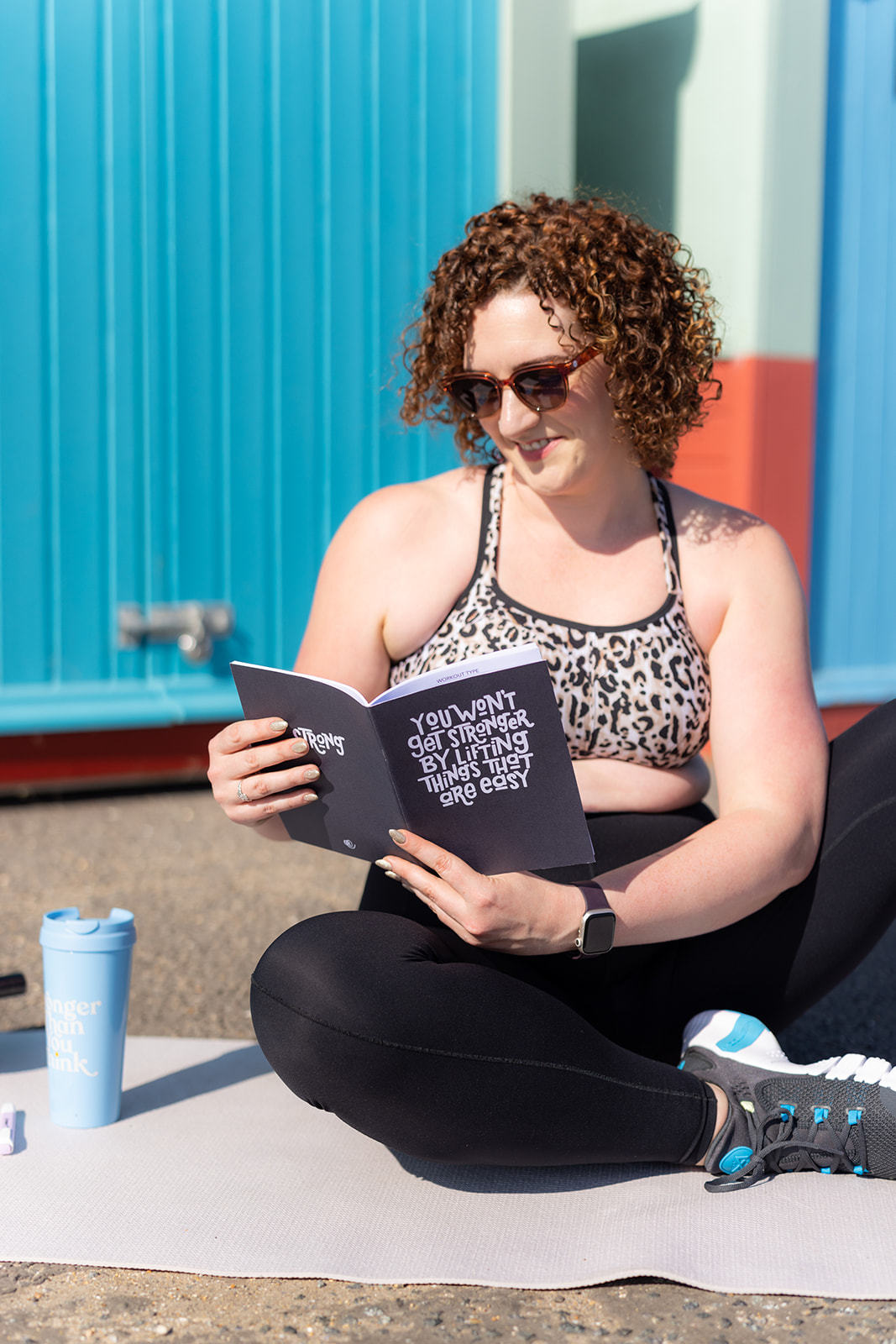
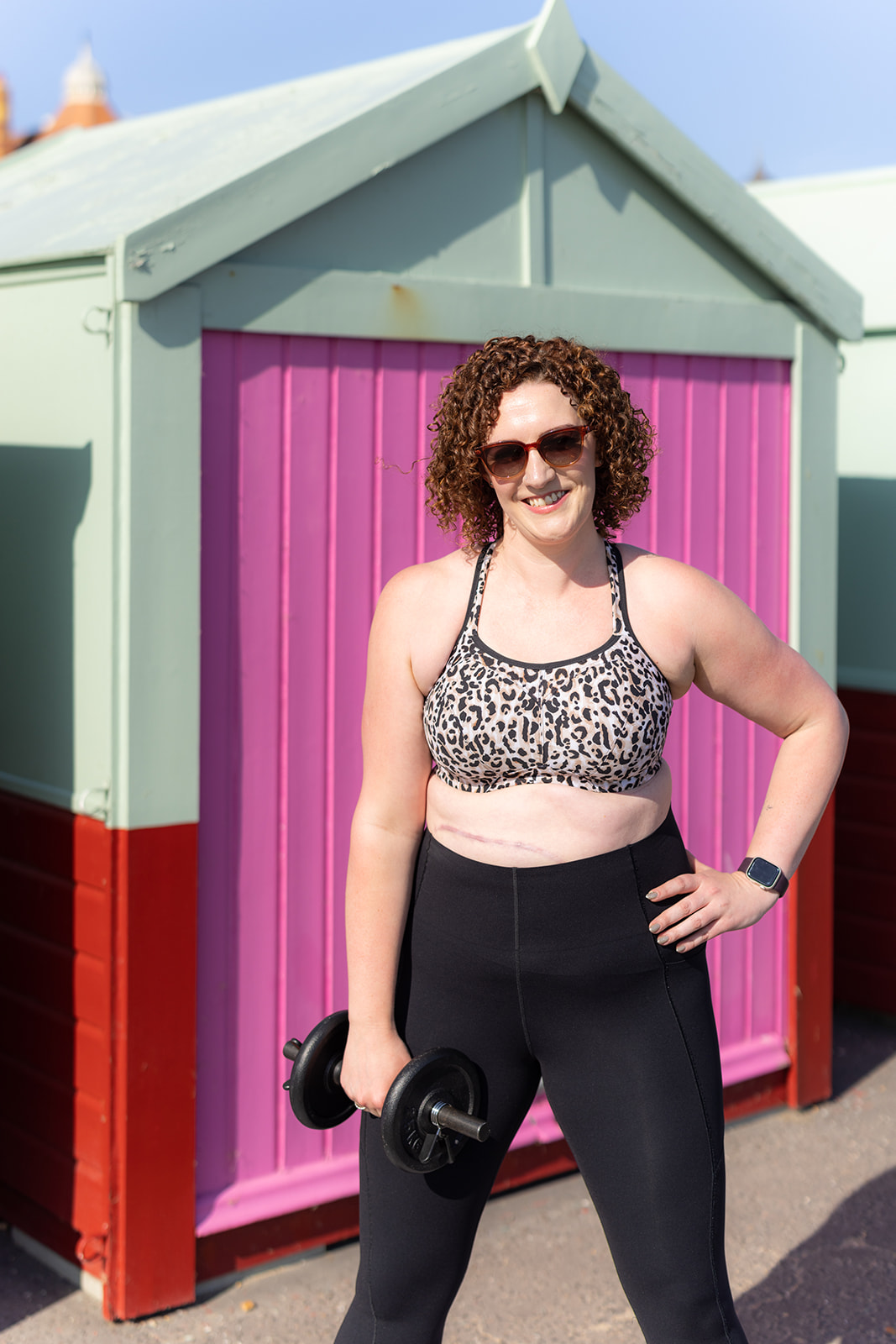
Horsham-based female personal trainer, Becky, recently undertook a training course about pelvic floor anatomy and exercises – here she shares some of what she learned…
I’m often heard saying that the pelvic floor is the most under-trained muscle group across all demographics, and pointing out that everyone (no matter their gender) has a pelvic floor, and ought to train it. A significant proportion of those who participate in strength training are doing so in order to change how their body looks, and whilst the pelvic floor is highly functional, this group of muscles has nothing to do with how we look, which is why many people ignore it.
Since having surgery on my abdominal muscles in 2018, I’ve worked hard on my own pelvic floor. I still had more to learn, and recently participated in a CPD training provided by Adore Your Pelvic Floor, which I highly recommend – these are some of my favourite things I learned…
Are your pelvic floor exercises outdated?
To jump straight in, it’s highly likely you’re following old advice that’s now regarded as inappropriate. Many people who’ve been taught pelvic floor exercises in the past will have learned that a supposedly ideal way of training your pelvic floor, is to use toilet trips to help you. People were encouraged to pause urinating mid-flow, hold, then continue urinating, and to do so several times throughout the day.
I’ve learned that this is no longer considered the right thing to do. What this exercise is good for, as a one-off, is to assess your ability – performing this test is a good way of establishing whether you are capable of this type of muscular control, and your ability to do it or not is a good thing to be able to report to a medical professional when seeking help and advice.
Pelvic floor exercises – what should you do?
I think that a lot of people become biased by the terminology, and when they hear “pelvic floor”, they think simply of the muscles in our pelvis and genital region. In truth, no muscle works in complete isolation, and with the pelvic floor in particular, we’re better-served by thinking of this being a group of muscles that comprises much of our trunk.
The muscles within the pelvic and genital areas are inherently linked to our breathing, largely via our diaphragm, and these muscles being too “high tone” (some people use the word “tight” here) is just as much of an issue as if they’re too “low tone” (sometimes referred to as “weak”).
The first thing to establish before undertaking pelvic floor exercises, is to check that you’re safe to do so – if you have experienced surgery, prolapse, diastasis recti, or another form of injury or illness, you need to see an appropriately-qualified medical professional first. Once you’ve been cleared to train, understanding whether your pelvic floor is high or low tone is important: if the former is true, you’ll need to focus on downtraining (that is, essentially, ensuring that you are able to relax your muscles as well as contract them) before you consider building strength. When you know that both kinds of movement are achievable for you, it’s then good to proceed with general strengthening.
Are pelvic floor issues increasing?
One of the things covered during the course was reasons pelvic floor issues occur. Traditionally, we’ve been taught that problems are generally linked to pregnancy and birth, but this is far from true. Pelvic floor issues can happen for many reasons, including treatment for other health conditions, they type of medication we take, and habits we form as early as childhood. Many of us will be familiar with school or public toilet facilities being unappealing or unavailable, and so training ourselves to avoid toilets when away from our homes – these are dangerous habits to form, and tend to be the start of compounding the problems we face in future.
Something that’s becoming increasingly common due to the way we fuel and train is that we disrupt the way our hormones are able to support our bodies, and cause weakness in our pelvic floor by under-fuelling and over-training. This has been seen recently in women who reach perimenopause, start taking HRT, and find their symptoms worsened or alleviated thanks to the help of medication. But this is increasingly common among younger people too – strength training is becoming more popular, but diet culture and misinformation abound, meaning that people are sometimes following sketchy advice they’ve found online.
All of this goes to prove my original point – we all ought to train pelvic floor in order to future-proof ourselves, and take good care of our bodies. If this is something you’d like help with, let me know…