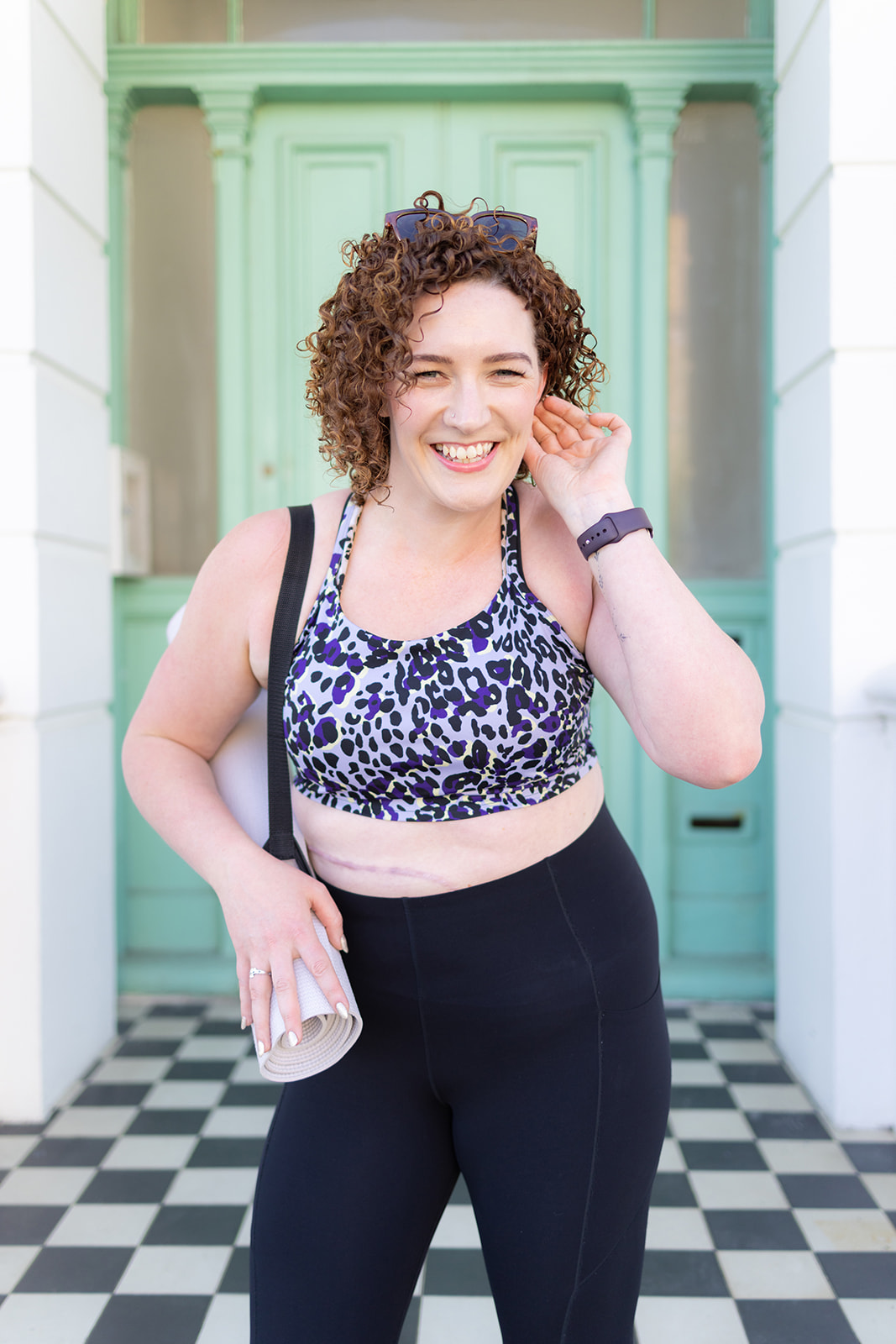
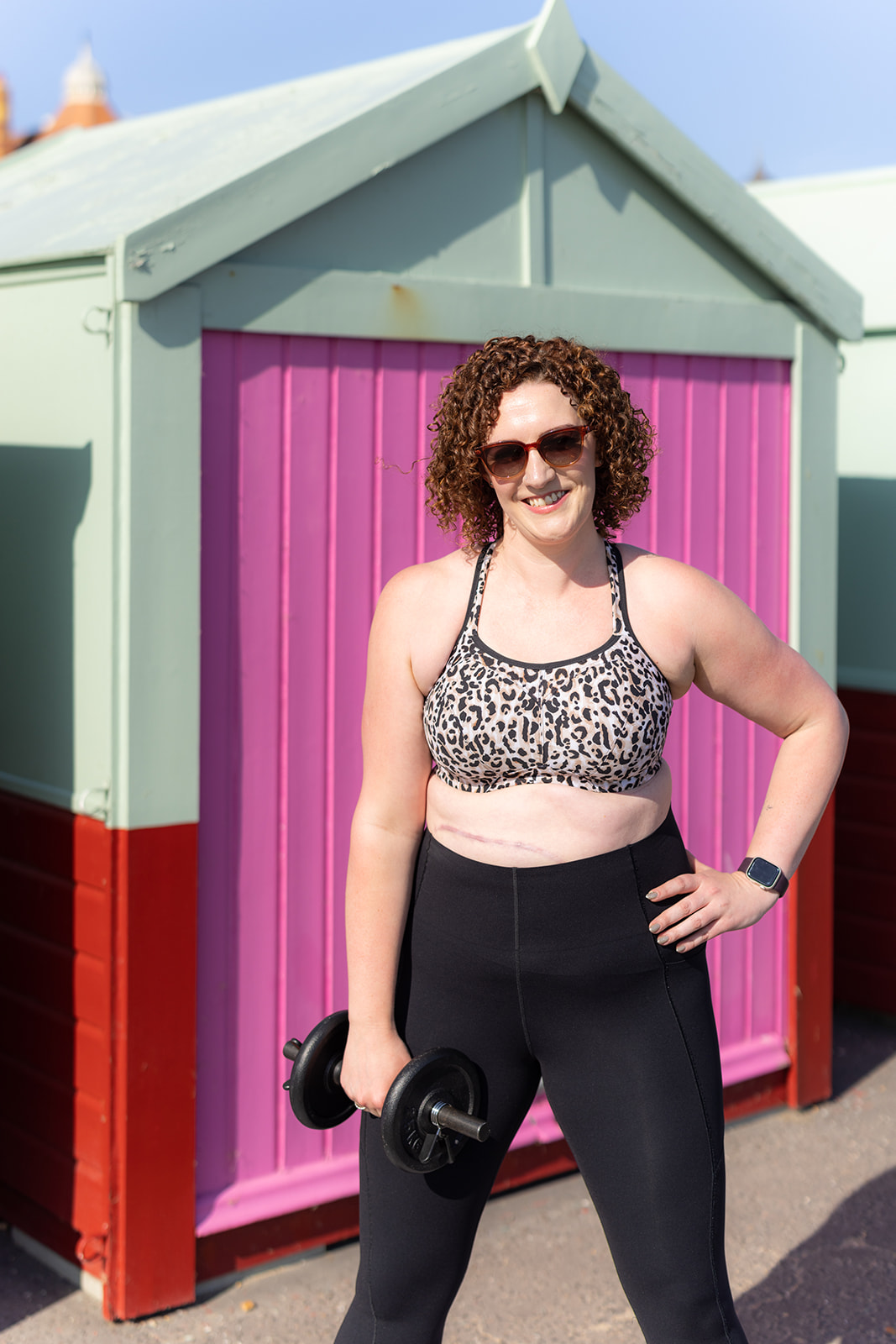
Horsham-based female personal trainer, Becky, specialises in rehabilitation and working with cancer patients and survivors, plus people who are looking to change how they feel about exercise. She also appreciates the mindful use of technology, and today considers fitness trackers…
It’s not the first time I’ve covered this topic, but things have predictably continued to evolve. We’ve moved beyond watches, and now have other wrist-worn trackers (such as the screen-free Whoop, which supposedly helps us to not obsess over stats), rings, and more. But are these devices helping us or harming us? Let’s have a think…
Fitness trackers – what do they do
Mass-market fitness trackers arguably started with devices such as pedometers a very long time ago! As technology evolved, we saw an increase in popularity in items such as the FitBit – a wrist-worn tracker which essentially was a pedometer with a heart rate monitor and a watch function. As these took off, others evolved to compete, with watches primarily aimed at runners, swimmers, and fans of other cardio activities.
Then came the smart watch, and a whole host of other opportunities opened up. Our devices could now function as miniature versions of our phones to an extent, allowing us to take calls, read and send simple messages, as well as monitoring other metrics about ourselves and personalising the activities we choose to track.
Sometimes, though, our relationship with our devices is not as health-promoting as the manufacturers would have us believe…
Fitness wearables and health monitoring
Just as with any other device, the aim is for the manufacturer to make money. The easiest way to do that? Have us use our devices as much as possible. Which is why they developed affordable devices which serve multiple functions. In the same way that we got rid of compact digital cameras when our phones started to do just as good (if not better) of a job, the more a wearable can do, the more we will use it for.
We are encouraged to track not just our workouts, but things like our VO2 max, our sleep, our resting heart rate, menstrual cycles and symptoms, and much more. With the data our devices are fed, they also now offer suggestions of whether we should increase or decrease the intensity of our workouts, and that’s where, for me, they really come unglued…
Outsourcing our decision-making
The thing is, human beings generally come fully-equipped with a very powerful tool known as a brain. And when we engage this tool, using it to listen to our bodies and think about how we truly feel, we get to make our own choices. Notice patterns. Understand ourselves. And improve how we respond to situations.
Technology is trying to tell us that it knows better than we do. That it can do a better job than our brains, by managing the data we feed them, and then analysing it for us. And, whilst it’s true that this has taken an arduous task off our hands, and does enable us to access years of data should we wish to (rather than either tracking it ourselves or forgetting how we felt), is that truly optimal?
And what are these systems and analyses based on? Have they been modelled and trained on people like us, or are they more used to professional athletes? Has previous data been sex disaggregated (meaning that differences in gender are factored in)? Are other demographic details noted, such as ethnicity, age, health history, job, lifestyle stressors, or anything else that might have an impact on how we feel and perform?
It’s often said that, when we pay attention to how we feel, we are our own best expert, and I’m inclined to agree.
Three things I like to use a fitness tracker for
There are a few things I find my smart watch useful for. At the outset of getting one, I decided not to wear it whilst sleeping – a long time ago, I found that tracking my sleep was causing more stress than it was solving. So I stopped. And here I still am.
Resting heart rate can be a great indicator for general health and fitness. When worn on enough occasions, a device will tell you what your typical range is, so you can identify when you fall outside this. Generally, a lower resting heart rate is better news, so if yours decreases during your fitness journey, that’s probably a good thing. Remember that fitness wearables aren’t completely accurate, nor do they provide a medical diagnosis. If you are ever concerned about your health, it’s time to visit a doctor.
I also like to use the “heart rate zone” feature my device offers during most workouts. This tells you roughly how hard you’ve pushed yourself and for how long. Everyone is different and, depending on your physiology, what feels like a high heart rate and a lot of effort for you will be different in someone else – compare yourself to yourself, rather than other people.
The final function I really enjoy my smart watch for is just that – I genuinely use it to tell the time. I aim to use it more than my phone for this purpose, as the minute I look at my phone to see what time it is, I’m distracted by other things. When I check my watch instead, I stay focused.
The golden rule is that your wearable should serve you, rather than you serve it. Don’t let your wearable wear you down.