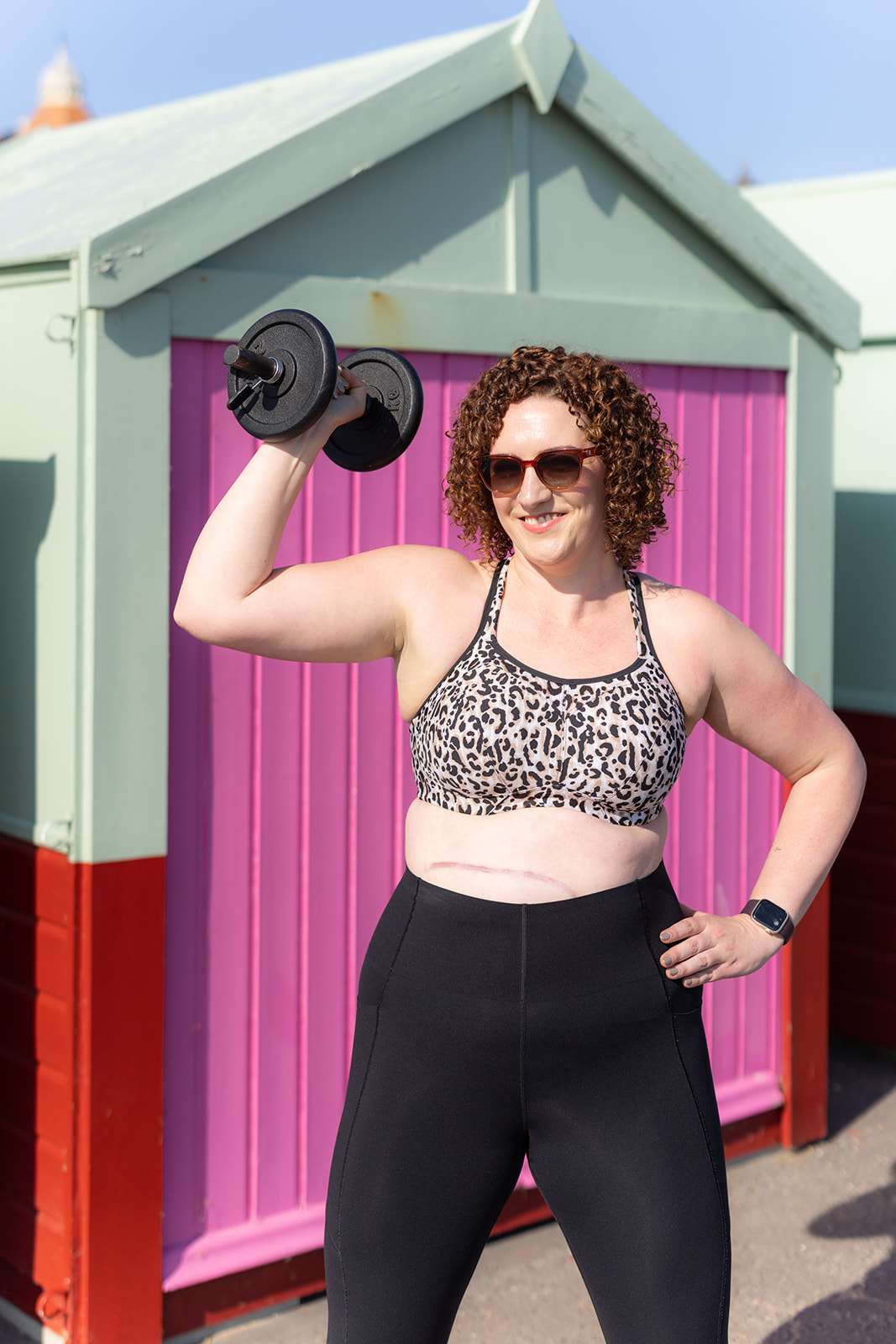
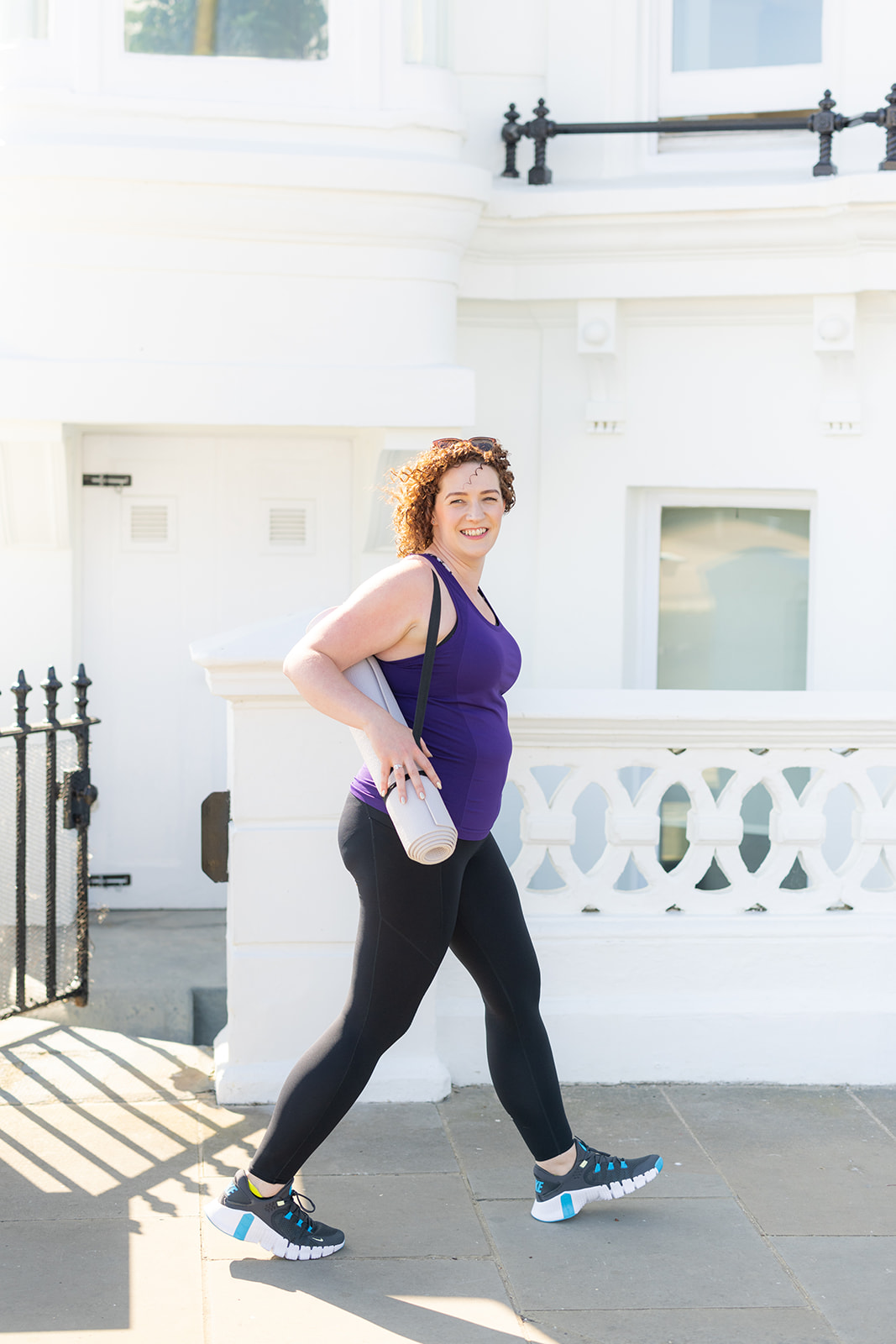
Cancer exercise specialist, Becky, is a female personal trainer based in Horsham. She works with a broad range of people whether they’ve experienced cancer or not, and loves to support people looking to improve their confidence in a gym environment…
A few weeks ago, I came across a Reel where someone was complaining about a gym’s social media content. The poster was upset that a gym they were considering visiting whilst travelling hadn’t shared details of equipment that they have, meaning that they didn’t know without contacting the gym what would be available for them to use. I had an opinion on this one, so I jumped into the discussion in the comments.
Gym social media content
There are some strong dos and don’ts in this area: apart from anything else, we shouldn’t be posting photos or clips of anyone online without their consent, no matter the purpose of the post. So it should go without saying that we shouldn’t share anything about visitors or members without their consent. But is that what people want to see anyway?
The purpose of any social media content comes down to what you’re trying to achieve. For businesses such as gyms, it may well be that you want to showcase your environment. Almost certainly you’re trying to sell something, and when that’s the objective, what you really have to think about is who you’re selling to, why, and how.
The appeal of social media content
Contrary to popular belief, we all use social media for different reasons. Some people are looking for recipe or fashion ideas. Others are using it as a way of watching comedy, reviews, or other entertaining clips. Some of us are sharing insight or information. And lots of people are laughing or smiling at animals. This list also isn’t exhaustive – once an internet-enabled camera was in the majority of our hands, the possibilities quickly became endless. And that’s something we all need to bear in mind.
What do gym users want to see on social media?
The point I made was that the gym the poster was discussing probably wasn’t targeting them. And that’s perfectly ok.
Yes, some people will want to know what equipment a gym has. And some will go so far as to be picky about the different brands of equipment that are offered (yes, just as with cars, there are different kit manufacturers, and some of them are terrible). But – speaking from my own early experience – there are a lot of people who won’t care all that much about whether a gym has a hack squat and what angle it operates on (yes, that is important).
When I first joined a gym, I honestly barely knew the difference between a dumbbell and a kettlebell, and no idea how to use one. I was more inclined to (inadvertently) move my legs in a backwards motion on a crosstrainer (if I could even be persuaded to step onto one), and I couldn’t have identified a chest press machine from a shoulder press machine if you paid me.
Some people will be laughing at how low my knowledge was, and that’s fine. It means that you’ve forgotten what it’s like to know nothing. My point is: when you know nothing about equipment and how to use it, what is available is irrelevant.
What I wanted and needed to know about a gym prior to using it were things like how much it cost, whether parking was available, and how safe and clean the environment was. Even as a personal trainer, those would likely still be my priorities now for two reasons: if the basics aren’t covered, the rest doesn’t matter to me; I know what I’m doing well enough to work around any lack of equipment, and my training doesn’t live and die by specificity – if I can’t tick a certain box on a given day, I move on without worrying about it and do that thing another day instead.
Not all social media content is for you
If you’re that worried about what a gym has, I suggest that you call, email, DM, or send a carrier pigeon to them. If they aren’t showing off about the kit they’ve got, it might not be the place for you at all; there are plenty of gyms that do geek out on equipment and flag up that they’ve got the kind of machines you don’t find everywhere.
But, quite rightly, many are focused more on their culture. I suspect that there are more people on the planet who are concerned with feeling safe and welcomed than there are looking for a pendulum squat, and so that’s where businesses put their energy. They promote class timetables and opening hours so that people know when they can access the space they want to use. They show consenting members sharing their stories to inspire others.
Fundamentally, gyms aren’t just equipment houses. They are an environment that people use to support their physical and mental wellbeing, as well as fostering relationships with others, and all of that, as well as what they use to do it, should come across via their marketing.