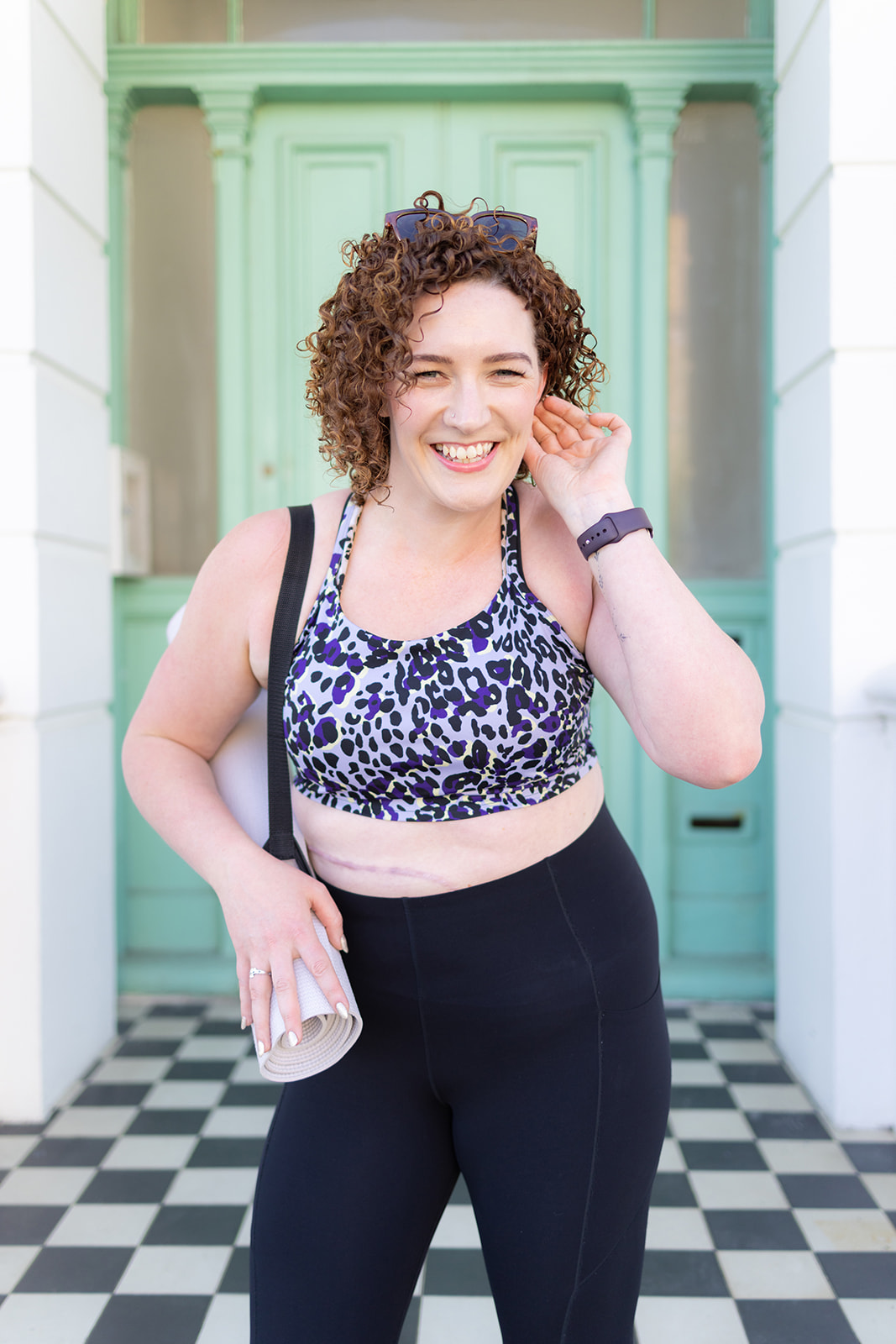
Becky is a female personal trainer based in Horsham, West Sussex. She works with a variety of clients, and was recently asked what her attitude is towards weighing clients. Here’s the answer…
I’m not surprised that prospective clients ask this question – it’s one of the assumptions that I made when I was first looking for a personal trainer at the start of my own fitness journey. So, what’s the answer?
What is it like working with a personal trainer?
I can’t speak for everyone, because personal trainers have a lot of flexibility to design their own services. The good and bad news is that, in the UK, personal training is an unregulated industry. This means that, whilst we have to hold an insurance certificate, and therefore pass a standardised course, there are no other ongoing checks done on what we do, or how we do it. Unfortunately, this can mean that some less positive practices are demonstrated by some people, whilst others are very different.
Something that I found highly unappealing about the idea of working with a personal trainer was the thought that they might weigh and measure me, or take photos of me to demonstrate a “transformation”. I wanted to learn how to lift weights safely and effectively, and hoped to get stronger, but I wasn’t at all interested in having the size and shape of my body monitored.
Fortunately, the person I chose to work with heard this loud and clear, and did what I asked him to do. As a result, I always felt comfortable, and enjoyed the process of showing up and completing my sessions. I consider myself really lucky to have had this experience – I know that others have experienced different things, and because I didn’t shop around before hiring someone, it was chance that I worked with someone who understood what I wanted, rather than talking me into what they wanted to do.
What do you learn in a personal training course?
In the UK, a personal training certification covers a range of things – anatomy, physiology, a small amount on nutrition, behaviour change, and how to coach someone, as well as a variety of training techniques. Within this, there is a section on “fitness assessments”, some of which are performance-related (meaning: methods of testing a client’s strength, endurance, range of movement, and other qualities that involve how they actually move), and some of which are physique- or physiology-related.
The latter includes a range of things from how to weigh someone and calculate their body-mass index (BMI), to calculating their body fat percentage, and measuring the size of different body parts (not in an inappropriate way! I mean things such as waist, hip, or arm circumference). It also covers how to take a person’s blood pressure and a few other similar measurements.
When I was studying, I found this section quite emotionally challenging and confronting – I knew that this way of doing things wouldn’t be my preferred practice, as it doesn’t align particularly with my values. I was content to learn it all purely in the context of passing the course and underpinning my other learning, and made several vows to myself and my future clients throughout the process.
My approach to weighing and measuring clients
It’s simple: I generally don’t. Unless they really want me to.
I believe in people being comfortable in their bodies, whatever that means for them, and changing your physique is by no means a compulsory part of my service. I love working with people to improve their confidence, posture, comfort, balance, proprioception, and enjoyment of exercise. I like to help people to learn new things, and discover positive things about themselves. None of that requires me to weigh them.
I do work with some people who would like to lose or gain weight. I discuss their reasons with them, but it is not for me to decide for them – I’m also not a doctor, so if this is a decision they have arrived at with a medical professional and they are seeking my additional support, I’m not going to contradict someone who’s better-qualified than me.
I practice a rule of ongoing consent: if someone asks me to be part of monitoring their weight, they have the right to choose differently at any time, no questions asked.
The suggestion of weighing or measuring your body will never come from me.
What should you say to a personal trainer?
If you are considering working with a personal trainer, and this kind of thing is important to you, be prepared to ask them what their approach is before committing to their service. I am very happy to be asked anything about myself or my services prior to a client joining my books – I have nothing to hide, and would like you to be comfortable working with me, so am happy to address anything you would like to know.
So go ahead and ask someone what their approach is to weight-monitoring, measuring, or assessing someone. I would be particularly inclined to do this if I saw someone’s website or social media pages making use of transformation photos – not all people who use these will also monitor people in this way, but it’s a sign that they may well do.
Whatever our choice, I think that all personal trainers should be transparent about how they work, what they expect from their clients, and what they’re willing to be flexible on. We are all welcome to practice and run our businesses differently, and this is good as it gives clients the freedom to choose. If you’d like to learn more about how I work, please get in touch.