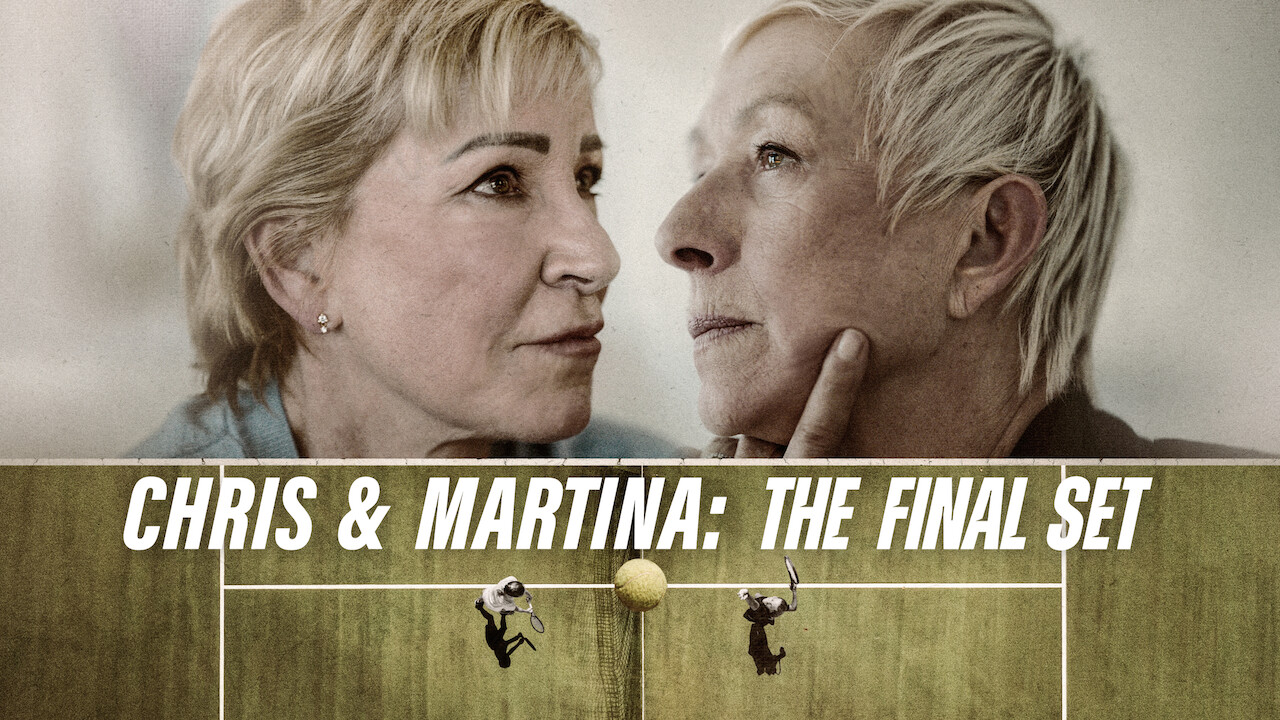
Prior to the start of the 2026 Wimbledon Championships, a documentary about two former champions – Chris Evert and Martina Navratilova – was released via Netflix. Horsham-based female personal trainer is a cancer specialist, and a tennis fan, and reviews the film here…
I was raised to be a tennis fan. During my childhood in the 90s, only four TV channels were available and, if I didn’t want to watch Wimbledon, there were two weeks of the year during which I’d therefore watch no TV. With my parents in charge of the remote, we often watched what they wanted to see, and during that fortnight, it was wall to wall tennis. I couldn’t beat them, so I joined them, learning the rules and the star players at a young age.
I have vague memories of witnessing the twilight of Martina Navratilova’s career, and would hear my parents (and grandparents) tell stories of other players from previous eras. Many of those players also featured then (and now) as commentators, so I grew up knowing who Navratilova and her great rival, Chris Evert, were.
Both are familiar faces to me as commentators, with much also being covered of their personal lives within the media. As a result, I knew that both women had recently undergone cancer treatment, and was intrigued to learn more via the documentary.
Evert and Navratilova: friends, rivals, cancer patients
I’ve watched a lot of documentaries, many of them about sports, and this one is well-made. The difference about this one versus others that I’ve seen is that two people share their cancer stories at once, as well as the details of their rivalry and friendship as it has evolved over decades. The story of their shared history is woven with footage from the recent path of them going through treatment for ovarian cancer (Evert), and throat and breast cancer (Navratilova).
For neither woman is this a first cancer experience: Navratilova was successfully treated for breast cancer in 2010, and Evert’s first occurrence came in 2022. Whilst filming is taking place, Navratilova seems to be at the end of treatment and entering monitoring stages, whilst Evert receives the news that she will need further treatment having previously completed treatment and being cleared.
Cancer as retired professional athletes
The instances of cancer depicted in the documentary have occurred to both women when they’re in their late 60s (Navratilova’s first breast cancer diagnosis happened whilst she was in her 50s), and therefore long after they’ve been in peak competition shape. However, both women have clearly maintained a certain level of fitness: they do talk about playing tennis in the recent past, plus other activities such as recent shared ski trips. The conversation about skiing is both light-hearted and competitive, and dovetails with a discussion about treatment that they’ve been through. This is also jokily competitive, with the two women laughing at themselves for the habit of die-hard professional athletes never abating – there is a reason that they have both been so successful on the tennis court, they both love to win and hate to lose.
What was interesting for me to observe is how honest they’ve been about the impact of treatment on their bodies. At times, it’s inescapably obvious – when you look at their faces, the colour and texture of their skin, how they carry themselves, and sometimes clearly the amount of muscle mass they have, it’s easy to see that their bodies have unsurprisingly been ravaged. The leap it’s then possible to take is to wonder what state their bodies would been had they not had a good level of fitness prior to diagnosis, and how much more difficult again recovery might have been.
Treatment side effects and athlete mentality
I’m slightly disappointed that the side effects mentioned are ones that we hear about a lot. Whilst nausea and hair loss are common, they’re not the only things that patients suffer with, but they are the things that get highlighted most often, and other side effects that are just as common, but didn’t get as good of an agent, then tend to come as a significant shock to people. Perhaps Evert and Navratilova have suffered from those things less, in which case that’s fair.
What was important was that they were so upfront about the emotional impact of these side effects. I think it’s great to normalise these when possible – at the beginning of the documentary, Evert expresses visible upset and frustration that she’s just got her hair to a point when she kind of likes it again, only to learn that she must undergo further treatment and likely lose it again. I’ve spoken to patients who feel “silly” for this mattering to them, and I always reassure them that they couldn’t be further from the truth. Nothing is silly when it has a negative impact, all feelings are valid.
Another aspect that I enjoyed was them sharing what helped them get through: Evert looked for support from her ex-husband, who is shown by her side helping her get to and from appointments. Navratilova had help from her wife, but is also upfront about having chosen to be alone for most of her treatment – as when she was a champion tennis player, sometimes being alone was what she needed and what worked for her.
Both of them express that their athlete mentality, knowing how to survive and do hard things also helped them. I enjoyed that Navratilova took a “one step at a time” approach, breaking down the percentage of treatments remaining to help her – I think that this is a great trick, and one that I’ve used in various scenarios myself. There’s also a very touching moment after Navratilova leaves Evert’s house, and the latter shares that she doesn’t know how her friend coped with as many sessions of treatment as she did (Evert’s treatment had involved fewer sessions at that point). It always strikes me as admirable that, when all is said and done and competitive careers are over, there does tend to be a genuine appreciation between athletes for what the other has achieved, be it championship titles or personal resilience in the face of other struggles.
When the cameras stopped rolling…
The documentary closes with good news for both women, and a level of visible relief that will be familiar to many. This human side to those who have achieved superhuman things can be incredibly comforting and validating.
What the documentary sadly wasn’t able to share is that Evert is once again on treatment – this news was announced by her the day prior to the documentary coming out, and is clearly very recent. Evert had been planning to be on the commentary team for Wimbledon 2026, and instead has had to have surgery and is resuming chemotherapy. I hope that she is able to survive this next round, receive good news once more, and join her friend for another round of reminiscing soon.