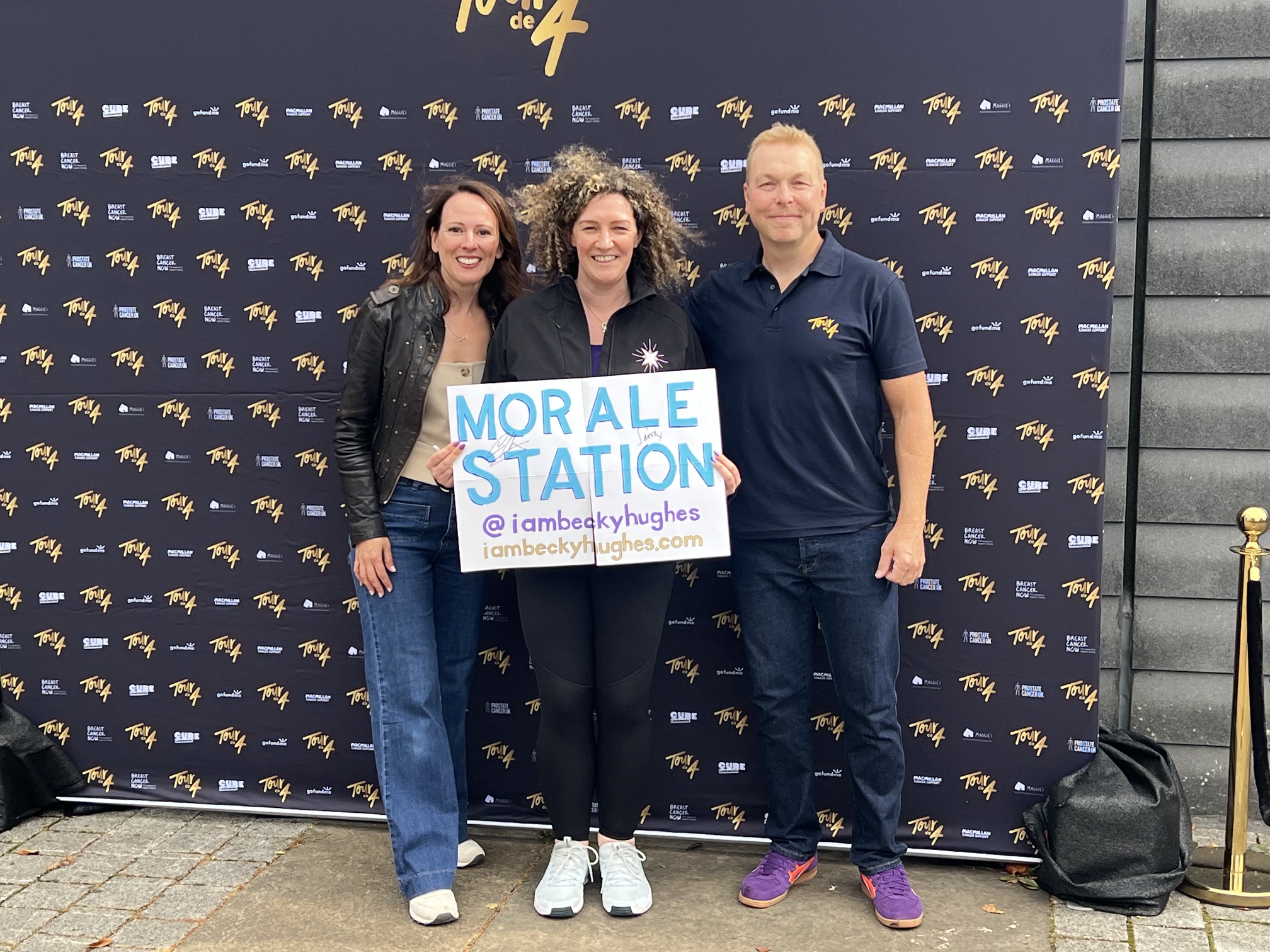

Becky is a female personal trainer based in Horsham, and specialising in cancer rehabilitation. Recently, the BBC shared a piece on cancer treatment waiting times, and she has thoughts…
Last week, the BBC published an article about the impact that waiting times have on cancer treatment. It raised a few thoughts that I’d like to share, and I have some advice for patients and their loved ones based on my own lived experience. Let’s discuss…
Cancer spreading whilst waiting for treatment
This was a big focus of the article – the fact that cancer typically requires urgent attention, but that our dear NHS struggles with this. The article presents a range off issues, from lack of facilities (particularly when it comes to radiotherapy, which I have heard about from my clients), and under-staffing, to the simple fact that letters aren’t received on time, and the systems supporting patients aren’t joined up.
Some of this mirrors my own experience, and I let out at least one sigh and several eye-rolls as I read the piece. I went through my diagnosis and treatment in 2018, and I’m thoroughly unsurprised that nothing has changed and that, in all likelihood, things have got worse.
However, there’s little point dwelling on those factors, as what’s needed to fix the system is time and a huge cash injection, neither of which anyone who’s newly diagnosed has. What you do have as a patient is your own voice, and this is the time when it’s more important than ever to use it.
Advice for patients: do your own admin
Whilst I hate to sound like I’m victim blaming, something that served me very well was to chase persistently. It can be a horrible feeling to think that you’re nagging. It might be easier to sit and wait, thinking that the problem might even go away (nobody wants to face the reality of cancer treatment). And it can be a lot of work that’s disruptive to your daily life. But the key thing is that your life matters more to you than it does to anyone else in this world.
It’s not personal. The NHS doesn’t work that way, and it can be a bit of a flaw when it’s you who’s waiting for news. It is a simple numbers game, and a system that you are part of. And it works best when you make the system work for you.
My journey to diagnosis involved three different tests: an ultrasound, a CT scan, and a biopsy. I was fortunate in that I received news of all of these appointments in a timely manner. However, when it came to getting the result of the biopsy, that news was less forthcoming, and it was the key to moving forward…
Top tip: find out when you should know more
When I had my biopsy, I asked the person doing the procedure when I could expect the result. I marked the date on my calendar, and braced myself for anxiety in the meantime. I wanted the worry to be over, so when news didn’t arrive when it should, I began calling that department. Having been unable to get through for several days and increasingly worried, I tried something else, and contacted the hospital’s PALS (Patient Advice Liaison and Support) team.
The PALS service was incredibly helpful: I explained my situation, and they acted on my behalf within the hospital to chase for me (sometimes you need someone to literally go and bang on a door!). I received a phone call the next working day with my results.
More patient advice: stop waiting for letters
I found out I was to be referred to another hospital, and that I could expect to be contacted in order to receive an appointment to attend a clinic with the consultant. I asked which consultant it would be, anticipating yet more paperwork going awry, and I called that consultant’s secretary the following working day, having Googled their phone number.
Sure enough, my referral (which was due via email) hadn’t arrived yet, and I was asked to wait. I called again later in the week, only to learn that my referral still hadn’t been received. At which point, I asked how long it might take to get an appointment once my referral was in their hands. The secretary had by now learned that I wasn’t just going to sit and wait, and actually booked me for an appointment a few days later.
The moral of the story? Stop waiting for letters, and start politely following up. We all know that the postal system can be shocking. We live in an era where we have phones and email addresses, far faster forms of communication, and when time is of the essence, this matters.
As an additional piece of advice: don’t waste your time contacting your GP, unless it’s them who is due to make the referral. GPs provide a specific service, and once they refer you on to somewhere else, they may be even less aware of what is happening than you are. Calling someone else is not going over their head or denying their authority – you are out of their hands, and they have no influence on your care at this point. Find out who your point of contact ought to be, and use it.
Are you a passenger or a participant?
As I said earlier in this post, being a patient is work. I’m sorry to have to say it, but sitting and waiting to be told what to do can be a contributing factor in your case being forgotten or delayed. Please always be polite when making phone calls or sending emails – it is never the fault of the person handling your query that things are delayed, and being rude tends to get you nowhere. Difficult as it can be to stay calm when you’re worried, it will help you.
If you struggle with communicating, ask a friend or family member to help you figure out what to say in advance, and have them with you when making or taking a phone call if you can. If you’re employed, keeping your employer in the loop can also be helpful if you feel safe doing so – you may need their support too in order to attend appointments, so it’s worth not dumping it on them as a total surprise if it can be avoided.
Systems work when you know how to use them, and being passive in this situation means that you may just be left waiting in the dark.