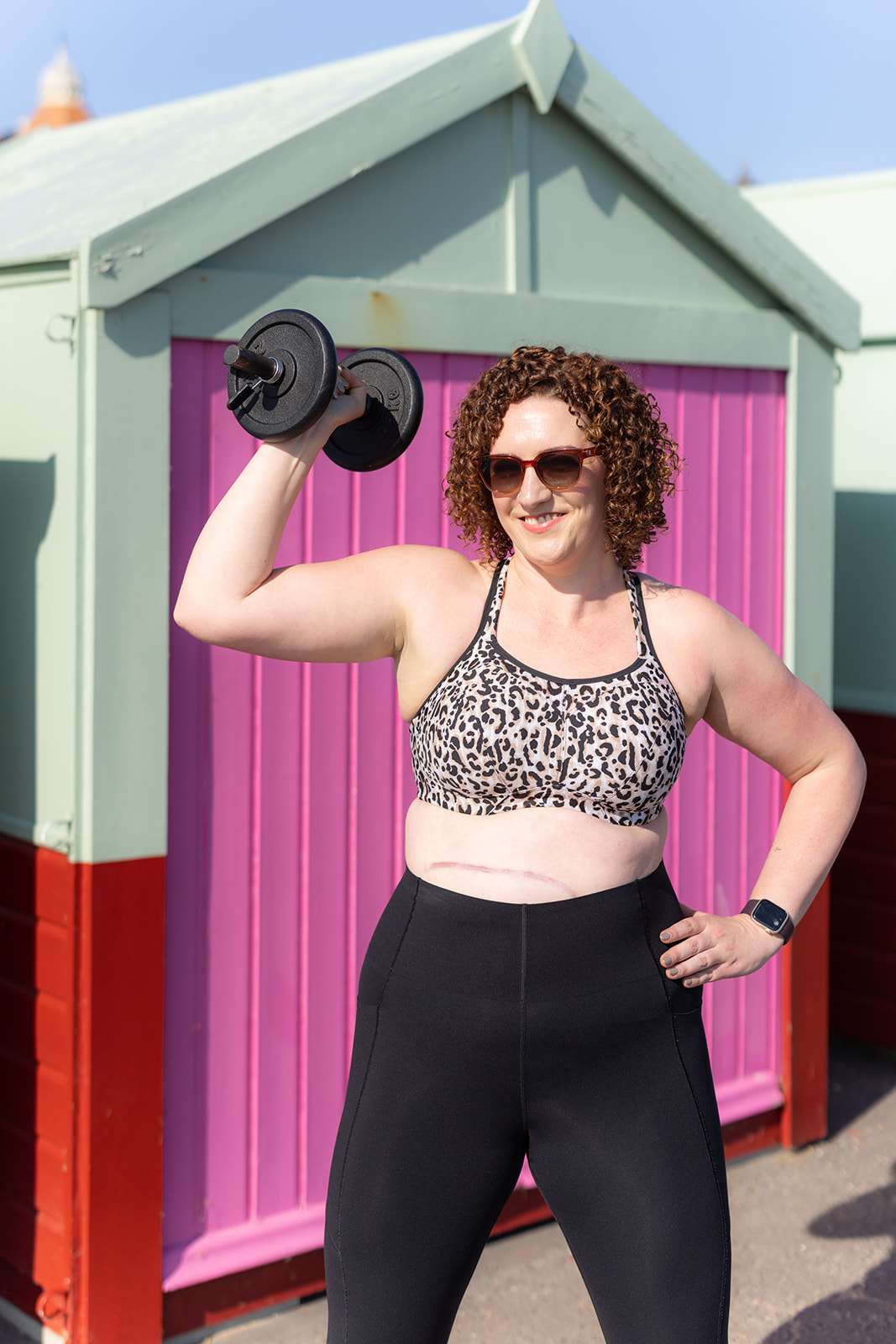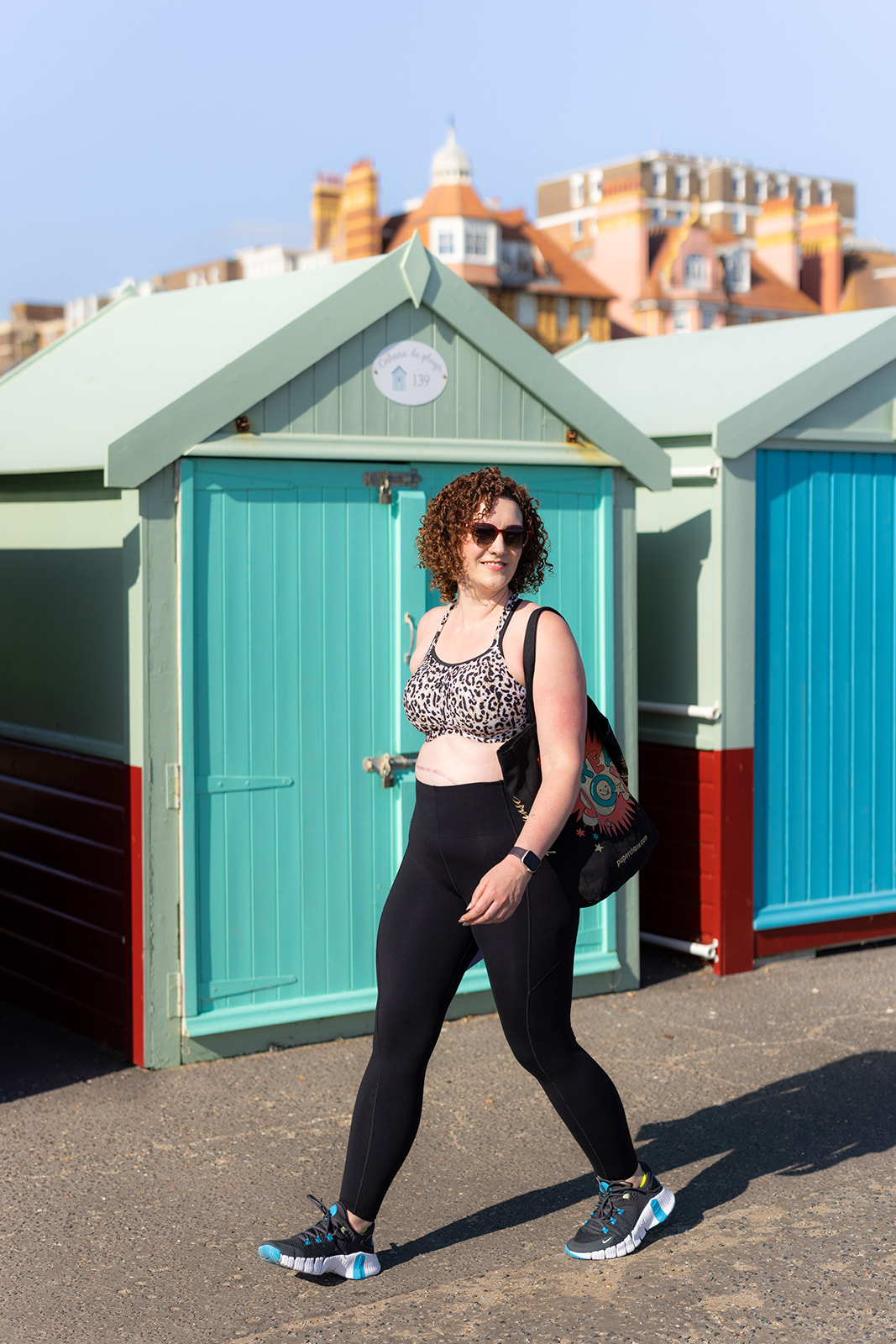
Becky is a cancer specialist personal trainer, helping to rehabilitate those who have undergone treatment. This weekend, she attended the 2026 Tour de 4 in Glasgow, a cycling event established by Sir Chris Hoy especially for cancer patients and survivors…
In 2025, Sir Chris and Sarra Hoy launched the Tour de 4. The event’s aim was to promote the fact that Stage 4 cancer doesn’t necessarily mean an imminent end of someone’s life, nor does it have to stop them from living whilst they can. I was immediately intrigued: one of my bugbears of the majority of mass participation fitness events is that they require a high minimum standard, which immediately means that they lack inclusivity and perpetuate the myth that fitness is purely about attainment and achievement.
The other thing that many people fear – kind of justifiably – about conditions such as stage 4 cancer is the perceived risk of those people taking part. That it’s “dangerous” for them to participate in vigorous or intense activity, and that costs will be high as a result.
Partly due to his own diagnosis, Sir Chris was undeterred, and was instead determined to create an event for people like himself. One of my clients – who has been treated for a sarcoma – is an avid cyclist, and so I encouraged him to book a place. Having helped him to train, I also wanted to be part of the day, and so I booked myself a trip to Glasgow…
Tour de 4 as a coach
Whilst I officially attended as a spectator and coach, every event I attend I also do so as an ex-event manager. My standards are high on several levels, and when the Tour de 4 information pack was sent out, I knew we were in for a good time. I was unsurprised: when an event is spearheaded by a multiple-Olympic medalist within their own sport, I think it’s fair to expect that it will be well-designed. And yet I was still impressed.
My client was participating in the 90km Red Route, the longest ride on offer, which involved a fairly early start. Fortunately, I wasn’t needed beforehand, so I made my way to the event’s home at a leisurely pace. The event is set up that the start, finish, and an event village are all based at Glasgow’s velodrome, which helps with inclusivity. In addition to two long, open road rides, there are two options available at the venue – the green route, which is 1km outdoor laps for families, and the yellow ride, which enables participants to spend time on a static bike indoors. The latter is perfect for those who lack confidence or can’t take the risk of an outdoor ride, and is a huge move for inclusivity.
The Tour de 4 experience
The event information clearly states that it is, “a ride, not a race” – there’s no chip timing for participants (though you are welcome to track via your own device), and I only belatedly realized the significant downside this presents for spectators; you have no idea where the rider you’re supporting is, unless they contact you. So there were lots of us waiting expectantly at the finish time with no real clue when the person we were supporting would show up! If I had my time again, I’d be inclined to furnish the person I wanted to meet with an AirTag or similar, for a bit of planning and peace of mind!
However, the unknown wait did mean that I took up a position and stuck with it, and also got to enjoy being entertained by event MC Bryan Burnett, as well as being right up close when Sir Chris rode across the finish line, as well as Sarra some time later and many others besides. The atmosphere was lovely, and emotions ran quite high – I chatted to a few people and heard stories of participants’ treatment, or reasons for taking part, and it was all quite humbling.
My client and his friend had a great time on the ride (despite getting rather wet and dirty due to the conditions during the morning!), and once they returned, we spent time taking photos, having lunch, and enjoying the atmosphere of the event village.
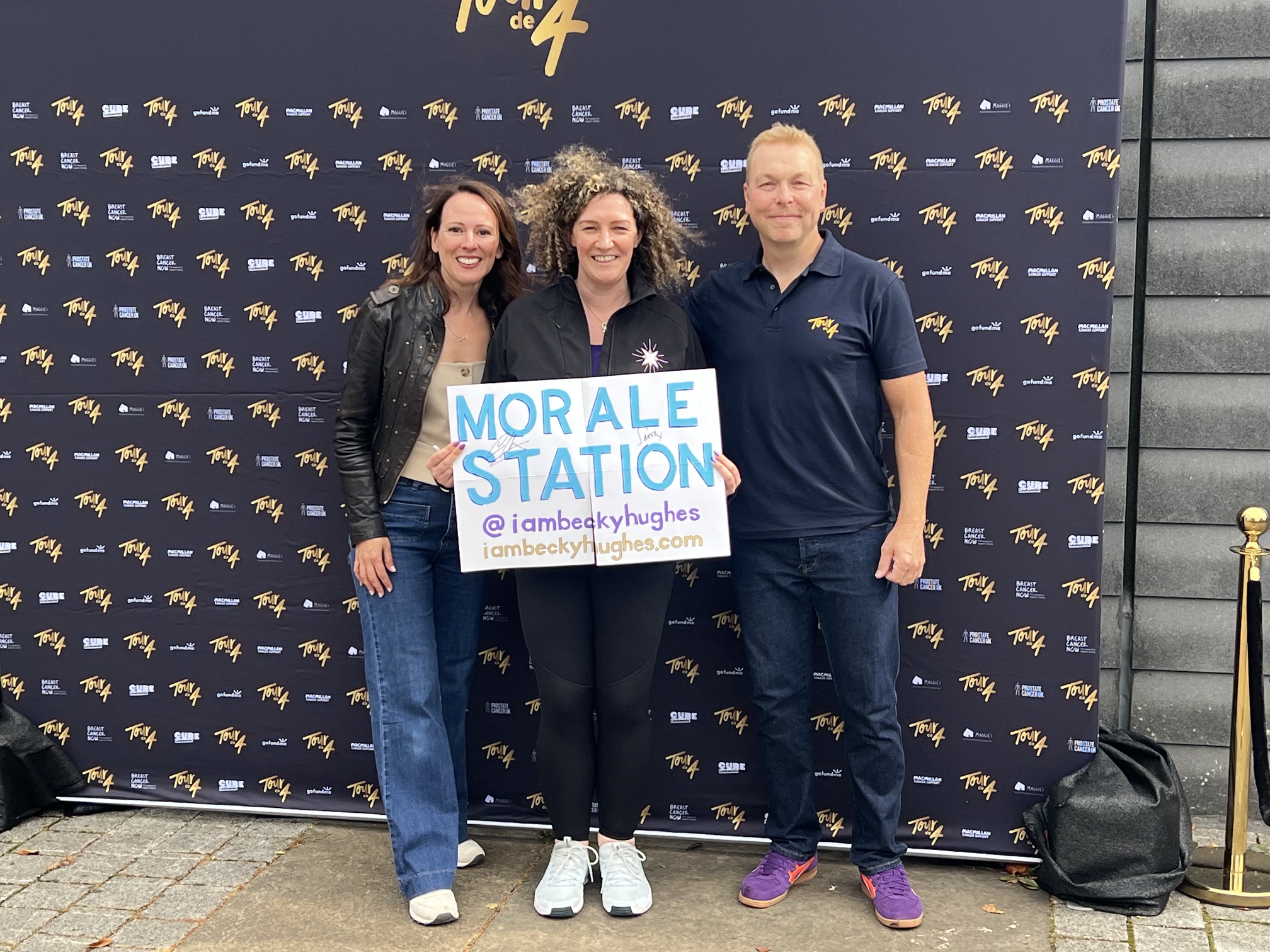
We stumbled across the meet and greet area at exactly the right time – Chris and Sarra were due to appear so we joined the queue, which was then closed not far behind us! They patiently signed autographs, posed for photos, and chatted with lots of people, not once losing enthusiasm. When it was my turn, I was ready with the banner I’d made for the occasion, asking both of them to sign it, and taking the opportunity to tell them what I do. They were both incredibly positive and encouraging, which was very kind. I’m going to treasure the photos, and the banner is going to become a feature of the wall in my office as a reminder.
Cancer and exercise: a broader message
Chris’s story is compelling for many reasons, and the documentary that was released in December 2025 is powerful. My message to everyone else is this: Chris is partly getting to live the way he is because of his history with fitness, but not having reached his level should in no way hold you back.
Look also at my story: I was diagnosed in 2018, having only been a frequent exerciser for just over a year. I had no designs on being a personal trainer at the time either – I’d arrived at fitness because I knew that I ought to, and then the universe had another message for me.
Chris himself is clear that a career involving intense drive, persistence, and psychological support was helpful to maintaining his fitness, and getting through cancer treatment, but it isn’t only the preserve of Olympians. If you get into exercise the day before you are diagnosed, or the day after, or some other day after that, you can still harness the power of physical activity in order to support yourself and your body during this time.
Cancer is the club that nobody wants to join. And there is also a positive community of people who are choosing to keep going waiting to show you the way.